
Beyond the Spa: Integrating a Professional Steam Room into Your Home
Home steam rooms might not be on everyone’s luxury bathroom design priority list, but they’re more than just a luxury novelty. They’re often perceived as too indulgent, a feature reserved for boutique hotels and prestigious, exclusive, high-end spas. Instead, they’re an investment for homeowners that truly value wellness and a healthy daily routine.
The benefits of steam therapy are well-known, but a more pressing question is how to integrate such a space into your home’s existing architecture without compromising on either aesthetics or functionality.
The luxury bathroom designers at Pier1 Bathrooms look to answer that in this short guide for you.
The Appeal of a Steam Room at Home
Steam therapy carries legitimate, research-backed, therapeutic benefits; the controlled humidity and heat combination provides physiological relief that regular bathing alone can’t replicate. When you sit in a functioning steam room, your body’s surface temperature rises, prompting vasodilation (when blood vessels expand, circulation increases, and muscles release tension).
Inhaling warm, moisture-saturated air is also good for respiratory health, providing relief from congestion and sinus pressure. The humid environment soothes irritated airways that dry heat can’t achieve. Regular steaming can also be a support to cardiovascular health, promoting circulation and perspiration.
What’s more, stepping into an enclosed, regulated steam room allows you to step away for a brief moment, and shut your daily responsibilities out temporarily. In a world so frantic and fast-paced, this separation is welcomed by many, craving quiet, warmth and separation, and by extension, witnessing reduced cortisol levels and greater mental clarity.
Is a Steam Room Easy to Install?
Creating a functional home steam room involves considerably more than installing a generator and closing a door. The technical requirements demand careful preparation, quality materials, and thoughtful, professional installation and aftercare. There are three primary features to choose carefully.
1. Steam Room Enclosure
The fundamental principle of steam is that it rises. As such, careful consideration must be paid to ceiling height, which, if it sits somewhere between seven and eight feet, is high enough for comfort but low enough to keep steam at a steady level, as opposed to gathering too far above your head.
If your current house has higher ceilings, then a circulation system is recommended, but they do come with additional complexity and costs. Ideally, the enclosure ceiling should slope to prevent condensation from dripping onto you repeatedly during use.
The enclosure must, above all else, be vapour sealed. Every surface (walls, ceiling and floor) must be waterproofed to a standard higher than a standard bathroom. A six-mil plastic vapour barrier sits behind a solid backer board, which is then covered with a waterproof membrane before tiling. The seams overlap, and every penetration point needs careful sealing.
2. Steam Room Generator
The steam generator, which is essentially a compact boiler, needs to be sized appropriately for your enclosure dimensions and surface materials. For instance, acrylic and glass don’t absorb as much heat as stone and tile, which require more powerful generators. Most domestic generators can sit within roughly 25 feet of the steam room itself, often in concealed cupboards or alcoves.
Generators must be flushed regularly to prevent a buildup of minerals, and regularly serviced to ensure they can work for long stretches. The better upkeep of your steam room and generator, the better it will work.
3. Steam Room Materials
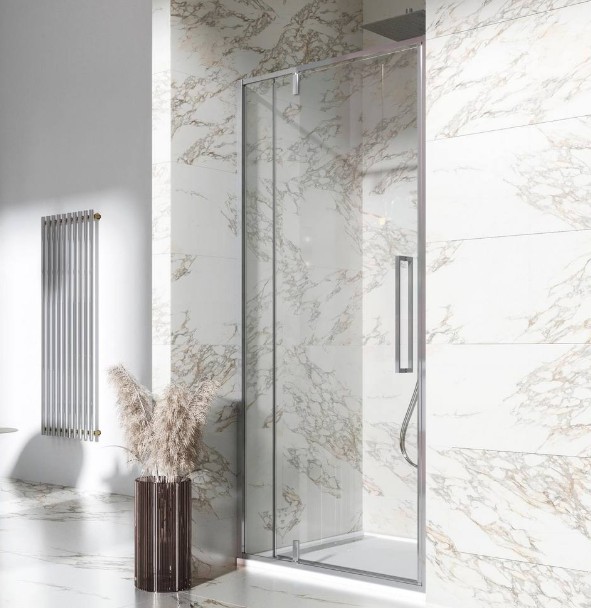
Not every attractive bathroom material suits steam environments. Porous surfaces like unglazed terracotta or untreated wood cannot withstand constant moisture exposure. Instead, select non-porous options: porcelain tile, ceramic, marble, granite, or travertine. Glass enclosures can be particularly exquisite and luxury, encouraging the natural flow of light and continuity with the broader bathroom while being appropriately ‘sealed off.’
Heated seating, such as built-in benches finished with the same materials as the walls and ceiling, can enhance comfort. Teak or cedar are good wood options, but they do require frequent maintenance and proper ventilation.

Making Smart Steam Room Design Choices
A home steam room should feel intentional, rather than ambitiously retrofitted. The most successful projects treat the steam enclosure as a natural extension to your bathroom and wellness space.
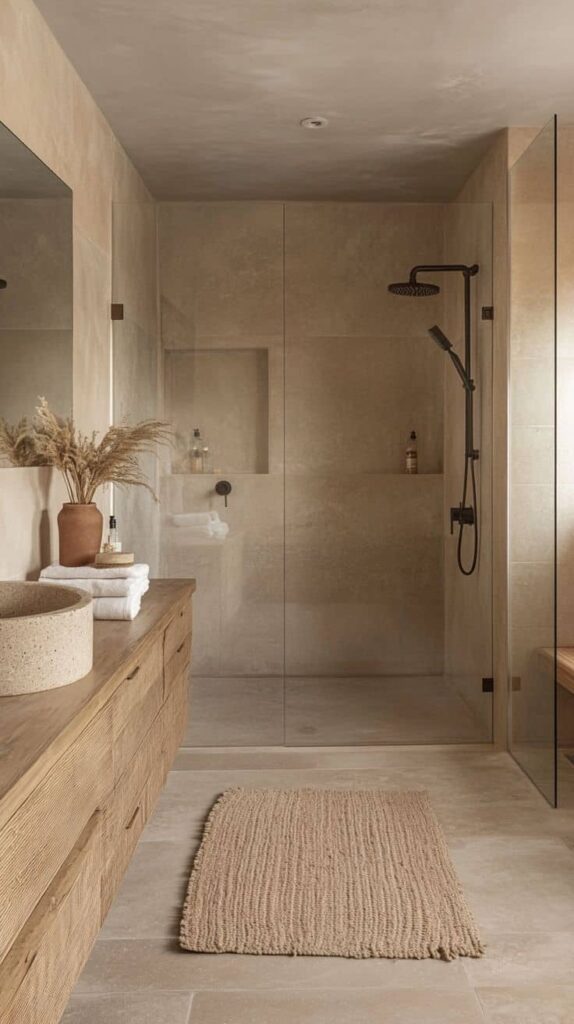
One such approach could involve creating a disparate ‘wet zone’ within the bathroom itself – a glass-enclosed space that can deliver both shower water and steam. This design makes effective use of space while encouraging visual openness.
If your main bathroom, for example, features honed limestone, that same material should ideally transcend into the steam enclosure. This creates coherence rather than the jarring effect of intentionally different zones aesthetically contradicting each other. Lighting is also an important factor, with recessed, steam-rated fixtures within the enclosure complementing ambient lighting outside of it.
For homeowners with sufficient space, a separate steam room adjacent to the main bathroom offers the ultimate luxury. This allows the steam environment to be purpose-built with ideal proportions and dimensions.
Is a Steam Room Right for You?
The decision to install a steam room at home rests on three primary factors:
1. Available space
2. Budget
3. Commitment
A steam room that’s not used intentionally is a waste of an investment.
Consider your daily routines honestly and pragmatically. If mornings rush past you, will you realistically use a steam room then? Does your schedule allow for a 30-minute decompression period regularly? Some homeowners find weekend usage sufficient, while others make it part of their daily routine.
Remember that smaller bathrooms might struggle to accommodate steam without sacrificing other features. However, creative bathroom design can often unveil solutions you’ve not considered, whether that’s converting an existing wet room or shower room, repurposing neighbouring storage, or incorporating steam features into a wider renovation plan.
Invest in Luxury Bathroom Design Elements
Just as home gyms, meditation spaces, and outdoor saunas have gained popularity, steam rooms reflect our evolving understanding of the home as a place for active wellbeing.
The investment in proper steam room installations (i.e., done correctly with quality materials, thoughtful design features, and regular aftercare) create a feature that’s inherently meant to enhance life quality.
If you’re considering a steam room feature as part of your bathroom or wider home, why not schedule a consultation with one of our friendly luxury bathroom design experts. At Pier1 Bathrooms we have the in-house design, supply and installation experience to tell you what will suit and work for your specific home and lifestyle. Let’s get a conversation going to see what’s feasible.